School ERP Software: Features Every Institution Should Have
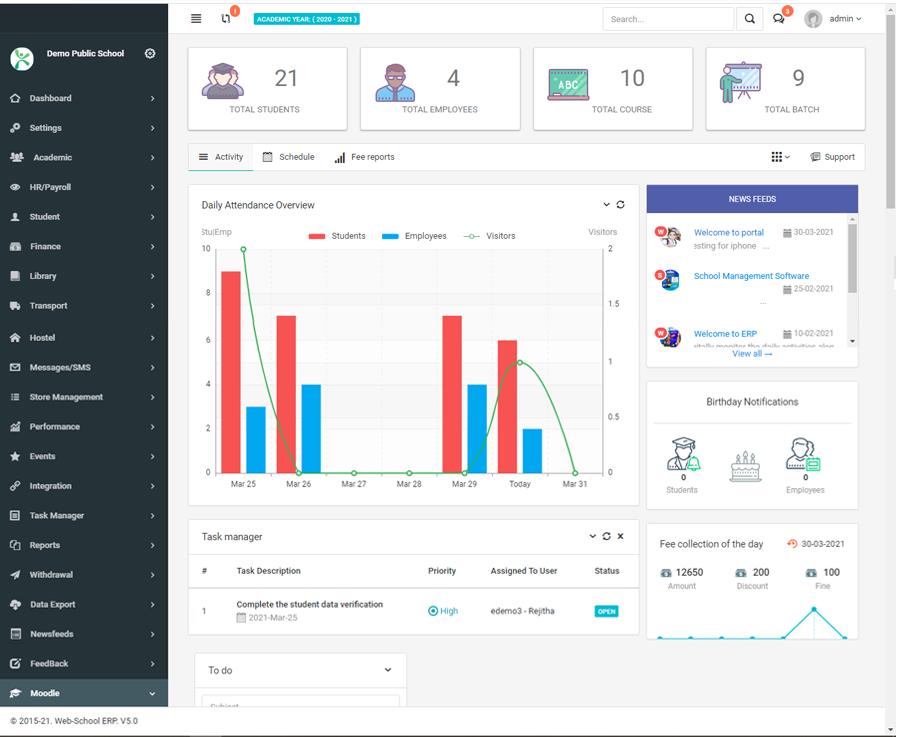
Educational institutions today require more than traditional administrative processes to manage students, staff, academics, and operations efficiently. A School ERP (Enterprise Resource Planning) system centralizes all school activities into a single digital platform, helping administrators, teachers, students, and parents stay connected. From admissions and attendance tracking to fee management, examinations, communication, and academic reporting, a School ERP streamlines daily operations and improves transparency. As schools and colleges embrace digital transformation, implementing a feature-rich ERP system has become essential for enhancing productivity, reducing manual work, improving decision-making, and delivering a better educational experience..
Introduction
Managing a modern educational institution involves handling thousands of daily activities, including admissions, attendance, examinations, fee collection, staff management, communication, and academic performance tracking. Traditional paper-based systems and disconnected software tools often create inefficiencies, increase administrative workload, and make information difficult to access.
A School ERP Software provides a centralized platform that automates and integrates these processes, allowing institutions to operate more efficiently while improving communication between administrators, teachers, students, and parents.
Whether it is a school, college, coaching institute, or university, a comprehensive ERP system can significantly improve operational efficiency and enhance the overall educational experience.
What Is a School ERP System?
A School ERP (Enterprise Resource Planning) system is an integrated software solution designed to manage academic, administrative, financial, and operational activities within educational institutions.
The system acts as a central database where all stakeholders can access relevant information based on their roles and permissions.
Typical users include:
- School Management
- Principals
- Teachers
- Students
- Parents
- Administrative Staff
- Account Departments
By digitizing school operations, institutions can reduce paperwork, improve accuracy, and make better decisions using real-time information.
Why Educational Institutions Need ERP Software
Educational institutions face several challenges:
- Manual record management
- Attendance tracking issues
- Fee collection inefficiencies
- Communication gaps
- Examination management complexity
- Reporting delays
A School ERP addresses these challenges by automating processes and creating a unified ecosystem for academic and administrative operations.
Essential Features Every School ERP Should Have
1. Student Information Management
The foundation of any ERP system is a centralized student database.
The system should maintain:
- Personal details
- Academic history
- Contact information
- Medical records
- Documents and certificates
- Class and section details
Administrators should be able to access complete student information from a single platform.
2. Online Admission Management
Admission processes can be time-consuming and paperwork-intensive.
A modern ERP should support:
- Online admission forms
- Document uploads
- Application tracking
- Admission approvals
- Student enrollment
This simplifies the admission process for both institutions and parents.
3. Attendance Management
Attendance tracking is one of the most frequently used features.
The system should support:
- Student attendance
- Teacher attendance
- Staff attendance
- Biometric integration
- RFID integration
- Attendance reports
Automated attendance tracking improves accuracy and saves administrative effort.
4. Fee Management System
Managing fee collection manually often results in errors and delays.
An ERP should provide:
- Fee structure management
- Online payment gateways
- Fee reminders
- Receipt generation
- Outstanding fee tracking
- Financial reporting
This improves transparency and simplifies financial management.
5. Examination and Result Management
Examinations are a critical component of educational institutions.
The ERP should support:
- Exam scheduling
- Subject-wise grading
- Mark entry
- Result generation
- Report cards
- Academic performance analysis
Automating examinations reduces workload and improves accuracy.
6. Timetable Management
Creating schedules manually can be challenging.
A School ERP should offer:
- Class timetable creation
- Teacher scheduling
- Room allocation
- Conflict detection
- Schedule updates
Efficient timetable management ensures smooth academic operations.
7. Parent Communication Portal
Effective communication between schools and parents is essential.
Features should include:
- Announcements
- Notifications
- Homework updates
- Attendance alerts
- Examination schedules
- Event reminders
Parents stay informed about their child's academic progress and school activities.
8. Teacher Management
Teachers play a vital role in educational success.
The ERP should provide:
- Teacher profiles
- Attendance tracking
- Workload management
- Leave management
- Performance monitoring
This helps institutions manage teaching resources effectively.
9. Homework and Assignment Management
Digital assignment management improves collaboration between teachers and students.
Features include:
- Homework distribution
- Assignment submission
- Evaluation tracking
- Feedback management
Students can access assignments anytime from any device.
10. Learning Management Integration
Modern educational institutions increasingly use digital learning tools.
ERP systems should integrate with:
- Online classes
- Learning Management Systems (LMS)
- Video lectures
- Digital content libraries
- Assessment platforms
This supports hybrid and remote learning environments.
11. Library Management
The ERP should automate library operations including:
- Book catalog management
- Book issue and return
- Fine calculation
- Inventory tracking
- Digital library access
This improves resource management and accessibility.
12. Transport Management
Institutions offering transportation services require dedicated management tools.
Key features include:
- Route management
- Vehicle tracking
- Driver information
- Student allocation
- Transport fee management
Parents can also receive transportation-related notifications.
13. Hostel Management
Schools and colleges with residential facilities benefit from integrated hostel management.
Features include:
- Room allocation
- Occupancy tracking
- Hostel fee management
- Visitor records
- Maintenance management
This ensures efficient hostel operations.
14. Mobile Application Access
Modern users expect mobile accessibility.
A School ERP should provide dedicated mobile apps for:
Students
- Attendance
- Homework
- Results
- Notifications
Parents
- Fee payments
- Attendance updates
- Communication
Teachers
- Attendance marking
- Assignments
- Timetables
Mobile access improves convenience and engagement.
15. Reports and Analytics
Educational institutions generate large amounts of data.
A robust ERP should provide:
- Student performance reports
- Attendance analytics
- Fee collection reports
- Teacher performance reports
- Admission statistics
These insights support informed decision-making.
16. Security and Role-Based Access
Educational data is highly sensitive.
A School ERP should include:
- User authentication
- Role-based permissions
- Data encryption
- Audit logs
- Secure backups
Strong security ensures data privacy and regulatory compliance.
Benefits of Implementing School ERP Software
Institutions that implement ERP systems typically experience:
Improved Efficiency
Automation reduces administrative workload.
Better Communication
Parents, students, and teachers remain connected through a single platform.
Increased Transparency
Real-time access to information improves accountability.
Reduced Operational Costs
Paperwork and manual processes are minimized.
Enhanced Student Experience
Students gain better access to academic resources and information.
Future of School ERP Systems
The next generation of educational ERP platforms will increasingly include:
- AI-powered student analytics
- Automated attendance using facial recognition
- Intelligent reporting systems
- Personalized learning recommendations
- Chatbot-based support
- Predictive academic performance analysis
These innovations will help institutions deliver more effective and personalized educational experiences.