Building a Multi-Tenant SaaS Application: Best Practices
Multi-tenant SaaS applications allow multiple customers to use a single software platform while keeping their data secure and isolated. This architecture helps businesses reduce infrastructure costs, simplify maintenance, and scale efficiently. However, building a successful multi-tenant application requires careful planning around database design, tenant isolation, security, performance optimization, customization, and scalability. Whether developing an ERP, HRMS, CRM, or industry-specific SaaS product, choosing the right architecture is critical for long-term success. This guide explores the key principles, challenges, and best practices for building secure, scalable, and high-performance multi-tenant SaaS applications..
Introduction
Software as a Service (SaaS) has become the preferred delivery model for modern business applications. From CRM and HRMS platforms to ERP systems and educational software, organizations increasingly expect cloud-based solutions that are accessible from anywhere, scalable on demand, and cost-effective.
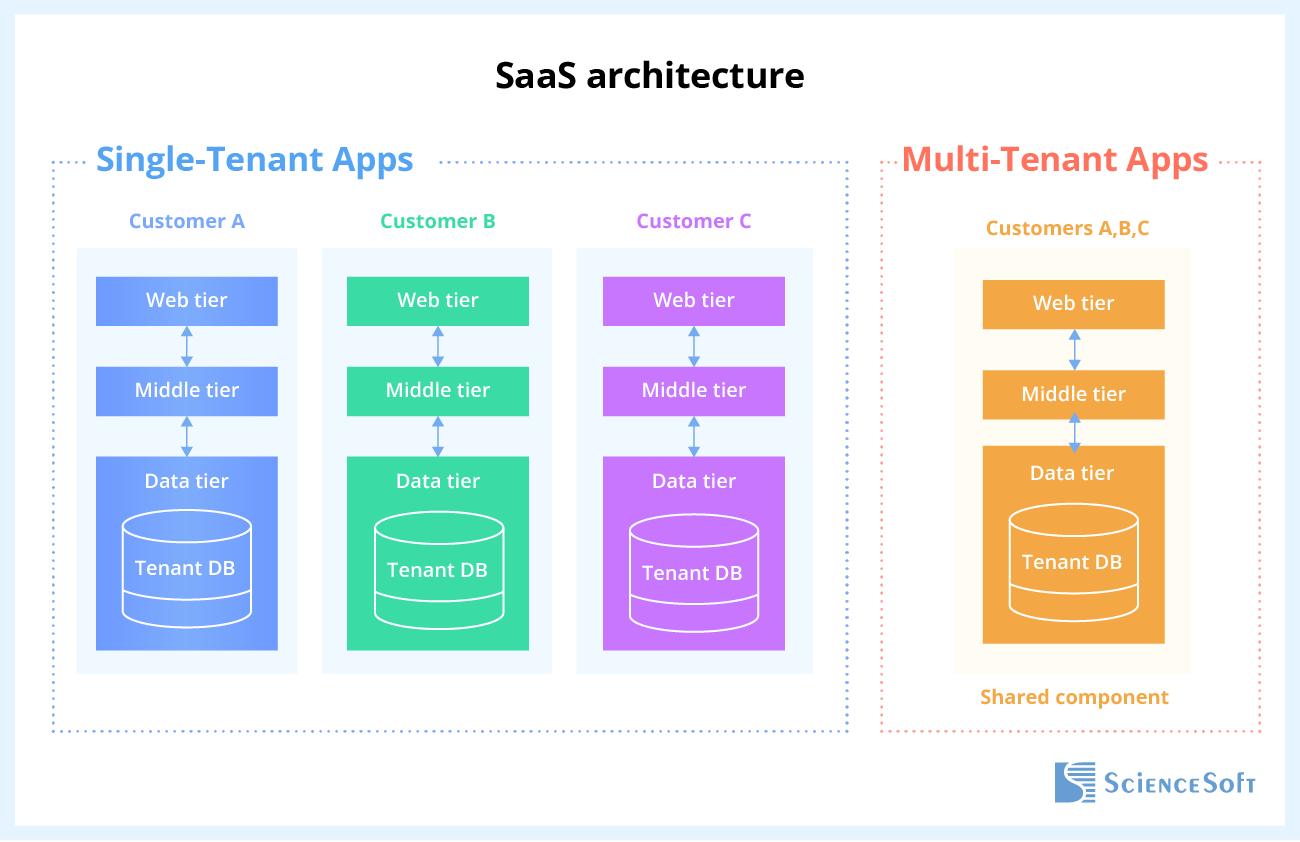
A key architectural decision when building a SaaS platform is whether to use a single-tenant or multi-tenant architecture.
Most successful SaaS products today adopt a multi-tenant model because it enables multiple customers to share the same application infrastructure while maintaining complete separation of their data and configurations.
While multi-tenancy offers significant advantages, it also introduces challenges related to security, scalability, performance, and customization. Understanding these considerations is essential for building a reliable SaaS platform.
What Is a Multi-Tenant SaaS Application?
A multi-tenant application is a software platform where multiple customers (tenants) use the same application instance while their data remains logically separated.
For example:
A SaaS-based HRMS platform may serve:
- Company A
- Company B
- Company C
All organizations use the same application, but each company can only access its own employees, reports, payroll information, and settings.
This allows software providers to efficiently serve multiple customers from a centralized platform.
Multi-Tenant vs Single-Tenant Architecture
| Feature | Single-Tenant | Multi-Tenant |
|---|---|---|
| Infrastructure Cost | High | Lower |
| Maintenance | Complex | Easier |
| Resource Utilization | Lower | Higher |
| Scalability | Moderate | Excellent |
| Updates | Individual | Centralized |
| Customization | Easier | Controlled |
| Operational Efficiency | Lower | Higher |
For most SaaS startups and enterprise platforms, multi-tenancy offers significant business advantages.
Benefits of Multi-Tenant SaaS Architecture
Lower Infrastructure Costs
Instead of maintaining separate servers and applications for each customer, resources are shared efficiently.
This reduces:
- Hosting costs
- Maintenance expenses
- Operational overhead
Easier Software Updates
Updates can be deployed once and immediately become available to all tenants.
Benefits include:
- Faster feature releases
- Reduced maintenance effort
- Improved consistency
Better Resource Utilization
Application servers, databases, and cloud resources can be shared across tenants, maximizing efficiency.
Faster Scalability
Organizations can onboard new customers without provisioning separate application environments.
This supports rapid business growth.
Tenant Isolation Strategies
One of the most important aspects of multi-tenant architecture is ensuring proper tenant isolation.
Shared Database, Shared Schema
All tenants share the same database tables.
Each record contains a tenant identifier.
Example:
- Tenant ID
- Employee Name
- Department
Advantages:
- Lower costs
- Easier management
Challenges:
- Requires strict access controls
Shared Database, Separate Schema
Each tenant has a dedicated schema within the same database.
Advantages:
- Better isolation
- Easier customization
Challenges:
- Increased complexity
Separate Database per Tenant
Each customer receives a dedicated database.
Advantages:
- Maximum isolation
- Improved compliance
Challenges:
- Higher operational costs
The appropriate approach depends on business requirements and expected scale.
Security Best Practices
Security is one of the most critical aspects of SaaS architecture.
Enforce Tenant-Based Access Control
Every request should validate:
- User identity
- Tenant ownership
- Role permissions
Users must never access data belonging to another tenant.
Implement Strong Authentication
Use modern authentication methods such as:
- OAuth
- JWT
- Multi-Factor Authentication (MFA)
- Single Sign-On (SSO)
Encrypt Sensitive Data
Protect customer information using:
- Data encryption at rest
- Data encryption in transit
- Secure key management
Maintain Audit Logs
Track:
- User activities
- Configuration changes
- Login history
- Administrative actions
Audit trails improve security and compliance.
Designing for Scalability
A successful SaaS platform should be designed to scale from the beginning.
Use Cloud Infrastructure
Cloud providers offer:
- Auto-scaling
- Load balancing
- Managed databases
- Global availability
These capabilities support business growth without major architectural changes.
Implement Caching
Caching reduces database load and improves response times.
Common caching solutions include:
- Redis
- Memcached
Caching is especially important for high-traffic SaaS platforms.
Optimize Database Queries
Poorly designed queries can become performance bottlenecks as tenant numbers increase.
Best practices include:
- Proper indexing
- Query optimization
- Database monitoring
Tenant Customization Strategies
Customers often require unique configurations.
Common customization options include:
Branding
- Logos
- Themes
- Color schemes
Business Rules
- Approval workflows
- Policies
- Notifications
Module Configuration
Enable or disable features based on subscription plans.
Proper configuration management allows flexibility without maintaining separate codebases.
Subscription and Billing Management
Most SaaS applications rely on subscription-based revenue models.
Consider supporting:
- Monthly plans
- Annual plans
- Usage-based billing
- Feature-based pricing
Integrating billing systems early simplifies future growth.
Monitoring and Observability
Continuous monitoring is essential for SaaS reliability.
Track:
- Server performance
- API response times
- Database utilization
- Error rates
- Tenant activity
Monitoring helps identify issues before they impact customers.
Backup and Disaster Recovery
Customer data is one of the most valuable assets of a SaaS platform.
Best practices include:
- Automated backups
- Multi-region replication
- Recovery testing
- Disaster recovery planning
Business continuity depends on reliable backup strategies.
Common Challenges in Multi-Tenant Applications
Data Isolation Risks
Improper implementation can expose one tenant's data to another.
Performance Imbalances
Large tenants may consume excessive resources.
Customization Complexity
Supporting unique customer requirements without creating technical debt can be challenging.
Compliance Requirements
Different industries may require specific regulatory controls.
Understanding these challenges helps teams build more resilient systems.
Technology Stack Considerations
Popular technologies for SaaS development include:
Backend
- Laravel
- Node.js
- .NET
- Java Spring Boot
Frontend
- React
- Angular
- Vue.js
Databases
- MySQL
- PostgreSQL
- MongoDB
Cloud Platforms
- AWS
- Microsoft Azure
- Google Cloud
Technology choices should align with scalability, development expertise, and business objectives.
Future Trends in Multi-Tenant SaaS
The next generation of SaaS platforms will increasingly incorporate:
- AI-powered automation
- Intelligent analytics
- Low-code customization
- Serverless architectures
- Advanced security frameworks
- Predictive business insights
Organizations that embrace these innovations will gain a competitive advantage in the SaaS marketplace.